
 By
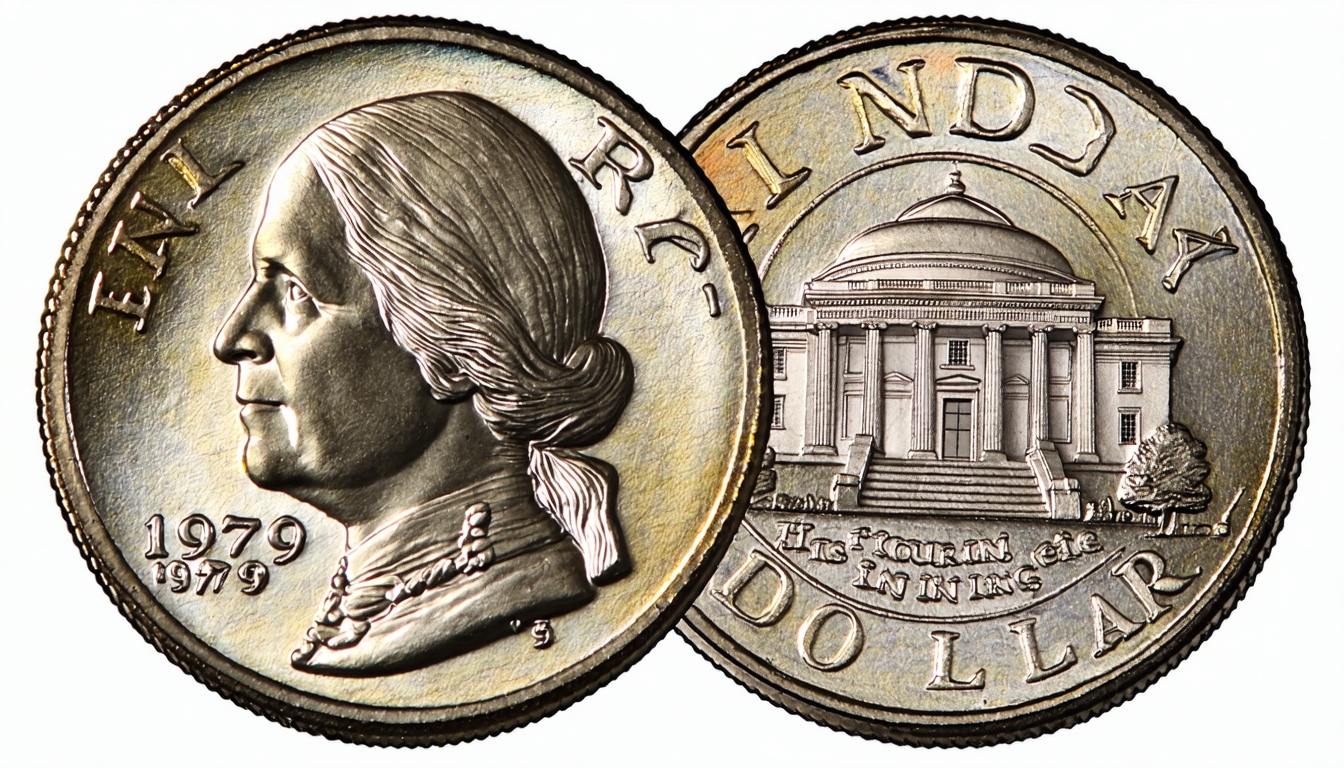
By Getting curious about what your 1979 Susan B. Anthony dollar might be worth? You’re not alone—in fact, these little silver-toned coins have captivated casual collectors and seasoned numismatists alike for decades. Oddly enough, they often carry a value that’s more compelling than just face value, depending on condition, mint mark, and whether they slipped through circulation unscathed.
Below is a narrative-driven, data-tinted dive into how variation in rarity, condition, and market trends shape the value of a coin minted in 1979. A human-but-not-too-perfect guide that blends facts with a bit of conversational charm.
Grading Basics: What Makes a 1979 Dollar Worth More?
Understanding coin value often starts with grading—it’s the numismatist’s yardstick for condition.
Circulated vs. Uncirculated: Once a coin leaves the mint, its chance of picking up dings or scratches—tiny or otherwise—increases rapidly. Most circulated Susan B. Anthony dollars find value hovering around face value or a modest premium, unless they’ve emerged with unexpectedly sharp detail.
Mint State (MS) Grades: Uncirculated coins are graded on a 70-point scale. An MS60 coin shows obvious marks, while an MS65 is a high-grade specimen with minimal flaws. A gem-quality MS67 might fetch double or even triple the asking price of more worn examples, but those are notably rare.
Proof Coin Distinction: Proofs were specially struck for collectors, with a mirror-like finish. They stand out from business strikes and when well-preserved, can fetch those “pleasant surprise” prices when someone spots them in a family stash.
Beyond grading, mint marks matter—1979 coins carry Philadelphia (no mint mark), Denver (‘D’), or San Francisco (‘S’) stamps—each with subtle demand differences among collectors.
Mint Mark Variations and Collector Preference
Different mints produced slightly different quantities, making them more or less collectible.
- Philadelphia (no mark) was the most prolific—so supply tends to exceed collector demand slightly, keeping those coins firmly mid-range in value.
- Denver (‘D’) strikes are more common than San Francisco coins—but a well-preserved ‘D’ still can edge out a Philadelphia in resale.
- San Francisco proofs (‘S’)—if in highly pristine state—consistently attract attention for their shiny, cameo-like surfaces, making them a go-to for more value-focused buyers.
Real-world examples show this nuance: a plainly worn Philadelphia 1979 SBA might net a couple of dollars at best; whereas a flawless ‘S’ proof could fetch multiples of that—sometimes climbing into the $10–$20 range if it looks particularly gorgeous, though most sit in the single-digit premium zone.
Market Trends: Are Susan B. Anthony Coins Climbing?
Interest in Susan B. Anthony dollars can ebb and flow based on broader numismatic trends. Let’s take a quick, tempered look behind the curtain at what nudges values upward—or downward.
- Retro-collecting Waves: A few years ago, nostalgia for late-1970s coinage sparked renewed interest, particularly among baby boomers remembering these coins at convenience stores. That nudge lifted prices marginally, though not dramatically.
- Condition Sensitivity: The market remains highly condition-sensitive. Even in a trend-driven uptick, circulated coins barely budged in price, while high-MS or proof specimens enjoyed more robust gains.
- Global Economic Influence: When broader bullion or precious-metal markets heat up, interest in numismatic coins tends to follow—especially for collectibles as affordable gateways to coin collecting. But because SBA dollars are clad—not precious metal—any impact here is indirect, tapping into collector mood rather than intrinsic metal value.
At its heart, demand for these coins remains steady but not frenzied—favoring quality and keen collector eyes more than speculative bubbles.
Real-World Valuation Snapshots
Let’s paint a few imagined—but entirely plausible—scenarios to illustrate this value spectrum.
Scenario A: A well-worn, circulation example from Philadelphia. You found it jammed in a change jar. It looks dull, edges are soft, details are faded. Sellable, yes—but likely just a dollar or maybe two tops if sold to a collector who wants to fill an album.
Scenario B: A crisp, uncirculated Denver strike—still glossy, sharp edges, no major flaws. In today’s small-lot auctions or online listings, similar coins often fetch a price in the low single-digit range over face value, maybe around $3 to $5. Not bad for a couple days’ research and a few bucks worth coin.
Scenario C: A deeply mirrored San Francisco proof, looked after in a plastic holder with barely any hairlines or fingerprints. That one’s often the stand-out coin. Depending on grade—say a PR67 or higher—it can command $10–$20 or more. Again, not millions, but a solid premium for something so accessible.
Pro Tips: What to Check in Your Susan B. Anthony Coin
If you’re examining your coin for value, here’s where to look closely:
- Surface quality: Any scratches, bag marks, or discoloration lowers value significantly.
- Strike sharpness: Does Lady Liberty’s tablet edge, hairlines, or eagle feathers remain crisp? Sharper detail signals a higher grade.
- Luster and reflectiveness: Proofs or mint-condition coins show more pop even under casual lighting.
- Mint mark clarity: A blurry or partially missing mint mark can affect desirability—especially on ‘S’ proofs among specialists.
- Packaging: Original mint packaging (e.g., proof cards or sets) can further bolster value—especially when intact and labelled.
Fair bit to check, but those small details can change the value from $1 to $15 pretty quickly.
“Collectors often overlook condition’s power. Even a coin that looks ‘fine’ might be worth more—if the shine and detail hold strong. It’s the difference between pocket change and a small find.”
This sums up the quiet magic behind numismatic value: subtlety matters.
Understanding Broader Implications: Lessons from Coin Value
You might think, well, it’s just a dollar coin, but the story behind value here parallels wider collecting behavior—and even broader economic themes.
- Scarcity vs. Visibility: Just because more coins were minted doesn’t mean they maintain higher value—condition trumps pure numbers. That echoes in all collectible markets, where well-preserved examples eclipse quantity.
- Narrative adds value: Susan B. Anthony’s likeness and historical significance make the coin appealing, even if the melt value is negligible. It’s part of a larger story that collectors emotionally invest in.
- Accessibility strengthens market: Because these coins are affordable, they often serve as childhood introductions to collecting. That creates generations of potential buyers—keeping demand consistent.
In practice, the narrative and accessibility often keeps this coin interesting longer than rarity might otherwise.
Where to Next? Strategic Moves for Owners
If you’ve got a handful of 1979 Anthony dollars and you’re wondering what to do:
- Do a casual home audit: Sort through for shiny, crisp specimens. Those may merit a closer look or even professional grading.
- Consider context when selling: A single coin? It’s probably best on auction sites or collector forums where small premiums are routine. A set? If tied to proofs or mint sets, you might get more bundling coins together.
- Stay patient during market lulls: Values don’t fluctuate wildly—most shifts are gradual. Holding onto a high-quality specimen may pay off later with minimal effort.
Summary: Key Takeaways and Next Steps
- Circulated 1979 dollar coins generally hold face value with perhaps a small bump for collector demand.
- Higher-grade uncirculated coins and especially proofs from San Francisco with good shine can fetch noticeably more—often between $5 to $20.
- Mint marks, condition, and presentation (like original packaging) shape the value significantly more than overall mintage numbers.
- Values shift gradually, tied to collector sentiment more than speculative momentum—making this a quietly rewarding area of collecting.
Curiosity and a good eye go a long way. Examine your coins, know what you’ve got, and if something seems particularly glossy or pristine—well, that might surprise you when you find out what’s hiding in your pocket change.
If there’s interest in diving deeper—grading systems, auction strategies, or cross-comparing other Susan B. Anthony years—just say the word.